+86-13516938893

Menu
global purchase
Rose Water

recommended

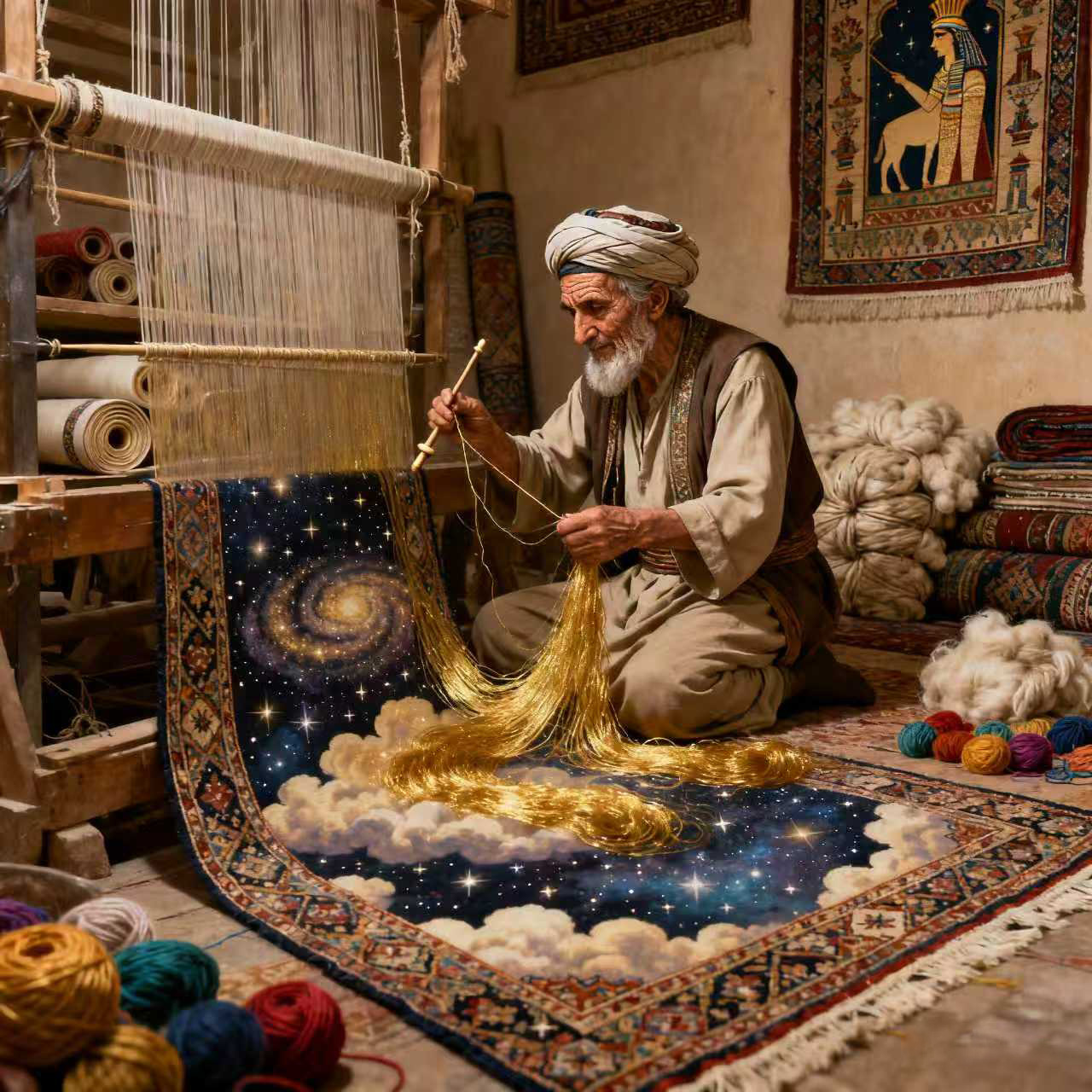
During the Sasanian Empire, the carpets of Shiraz were renowned far and wide, and none surpassed the craftsmanship of the elderly weaver Hadi. His carpets bore intricate patterns like starry skies, and stepping on them felt like treading on clouds—most remarkably, each piece wove into its threads a true story, as if time itself had been spun into wool.
Late that autumn, a royal messenger arrived at Hadi’s small workshop, bearing three bolts of gold-embroidered silk brocade and a sack of pure gold. “The king commands a carpet titled The Glory of the Empire,” the messenger said condescendingly. “Weave the palaces of Persepolis, the merchant ships of the Persian Gulf, and the caravans of the Kavir Desert into it. Present it in three months’ time. If it pleases the king, you shall be granted a manor; if not, you’ll feed the vultures in the desert.”
Hadi stroked the wool in his hands, glanced at the plane leaves drifting outside the window, and nodded slowly. He dismissed his apprentices, locked the workshop door alone, and even had his wife leave flatbread on the stone platform outside. No one knew what he did inside—only the endless clatter of the loom echoed day and night, as delicate as silkworms gnawing on mulberry leaves.
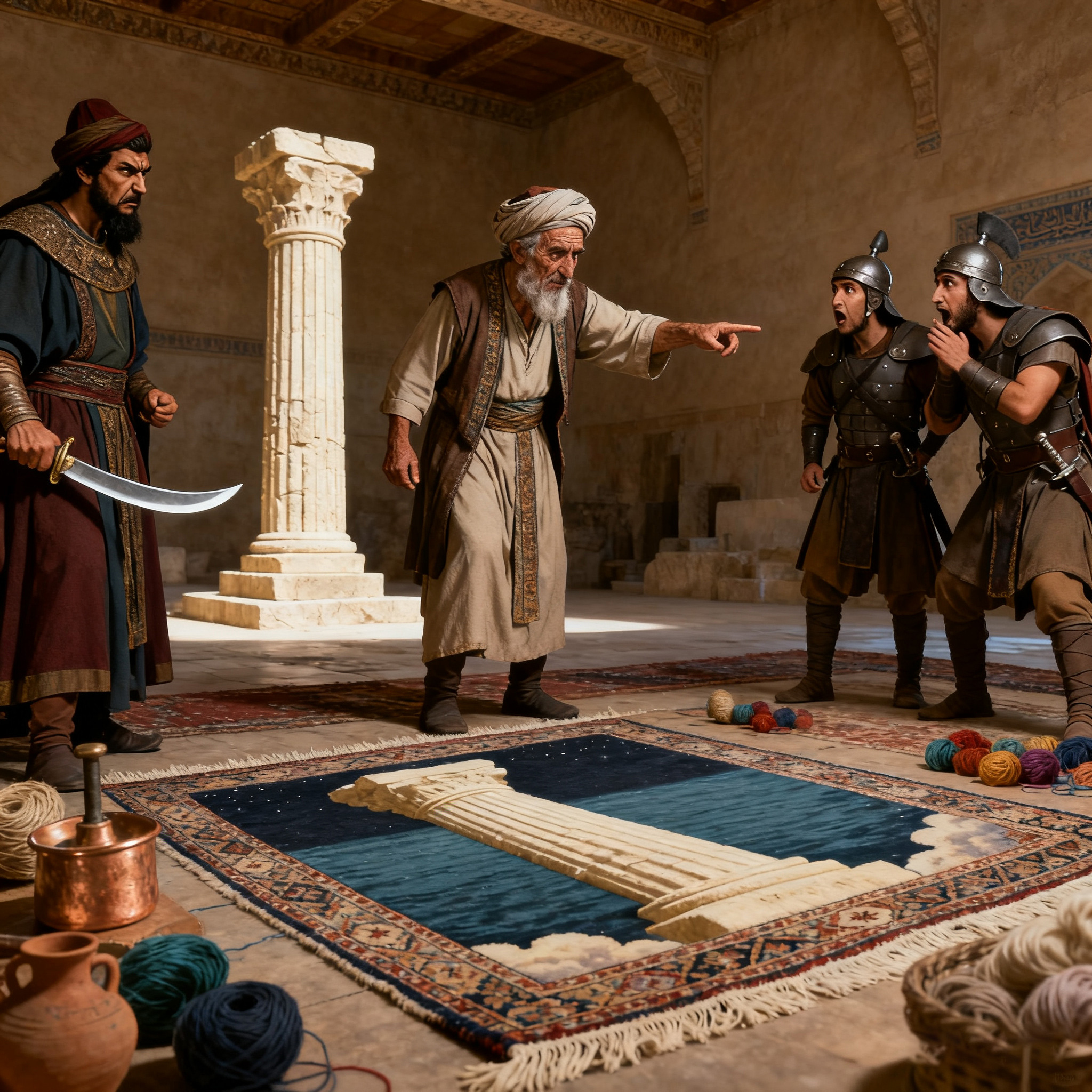
Two months later, the messenger suddenly burst in with soldiers. Spread across the workshop floor lay half-finished carpet: the stone pillars of Persepolis were already taking shape, their bull carvings lifelike, but the sea where merchant ships should have been remained blank. “Why delay?” the messenger drew his scimitar, its sheath clanging sharply against the stone floor.
Hadi set down his colored threads and pointed to the empty space. “Last year, a storm struck the Persian Gulf—three of the king’s merchant ships were lost, and caravans were stranded in the desert without water. To weave full ships and grand caravans would be to deceive the king and dishonor the dead.” The soldiers gasped, and the messenger’s face turned livid. “The king wants glory, not your truth!”
Hadi said no more, but sat back down and picked up his silver threads to continue weaving. The messenger snarled, “Fail to deliver a complete carpet by the deadline, and you’ll lose your head,” before storming off. That night, his wife pleaded through the crack in the door: “Just weave a few ships to satisfy them—your life matters!” Hadi replied softly, “Carpets are woven for future generations. If even craftsmen dare not speak the truth, these carpets will be nothing but threads, without a soul.”
On the day of presentation, Hadi carried the rolled carpet to the royal palace. In the grand hall, nobles and officials stared intently as the king ordered it unfurled—all held their breath. Sunlight streamed through the pillars of Persepolis onto the carpet, the dunes of the Kavir Desert glowed golden-red, and on the Persian Gulf’s surface, only three half-submerged shipwrecks floated, beside a cluster of camel thorns where a vulture hovered.
The king’s expression darkened. The messenger stepped forward at once: “Your Majesty, this old weaver dares to defame you—he deserves death!” Hadi bowed deeply, his voice calm as the morning mist over the Persian Gulf. “Your Majesty, I wove the true scene of last year. Those ships at the bottom of the sea carried thirty sailors’ lives; beside those thorns lie the bones of five caravan guides. To weave false glory would be to leave these souls unavenged.”
Silence fell over the hall. The king stared at the carpet for a long time, then suddenly rose and walked to Hadi, lifting him up with his own hands. “I once ordered historians to record that storm, but they only wrote, ‘Autumn floods caused no harm—trade routes remain open.’ Your carpet speaks truer than ten volumes of history.” He pointed to a small blue hyacinth in the carpet’s corner. “This is your wife’s favorite flower, is it not? Weaving in the longing of family gives this carpet true warmth.”
Later, The Glory of the Empire was hung in the palace’s council chamber. Whenever ministers debated state affairs, they would look up and see the shipwrecks in the Persian Gulf. Hadi declined the king’s manor, choosing instead to return to his small workshop with his wife, continuing to weave carpets that held the truth.
Many years later, the Sasanian Empire fell, and Shiraz endured countless wars—but Hadi’s carpet miraculously survived. When people restored it, they discovered that on the planks of the three sunken ships, each sailor’s name was woven in ultra-fine gold thread; beside the camel thorns, the hometowns of the guides were inscribed. And hidden within the petals of the blue hyacinth was a tiny phrase: “Truth outlasts glory.”